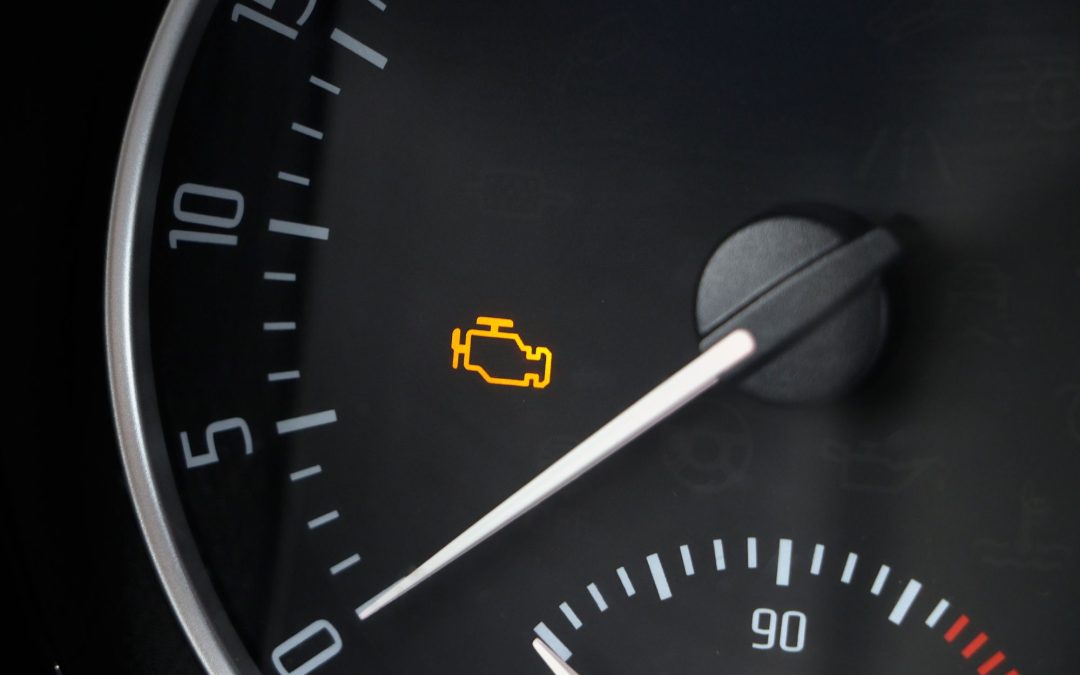
The Service Engine Soon light tends to come on at a bad time: in traffic on Kingston Pike, leaving the West Town Mall parking lot, or right before you head out on I-40. What it actually means is simpler than it sounds: the engine control module has stored a fault code and wants a technician to read it. Whether that’s urgent or not depends on one thing you can check from the driver’s seat without pulling over.
The service team at Ted Russell Nissan can read the code, explain what it means, and tell you what’s needed before any work is authorized. Schedule online or give us a call.
Nissan Service Engine Soon Light On in Knoxville?
The service team at Ted Russell Nissan will read the code and tell you what’s going on before any work is authorized. Schedule online or give us a call.
Schedule Service
Solid Nissan Service Engine Soon light vs. flashing: the difference that determines urgency
A solid light means the system has detected and logged a fault, but the engine is still running within a range it can manage. Driving normally to the service center is generally fine. A flashing light is different. It means an active misfire is happening right now, sending unburned fuel into the exhaust. That damages the catalytic converter quickly, and every additional mile driven through a flashing light makes the repair more expensive. If the light is flashing, ease off the throttle and get to a service center the same day.
On older Nissans the light may read “SERVICE ENGINE SOON” in text. Newer models show an engine-shaped icon instead. Both refer to the same circuit and the same set of diagnostic codes. The only meaningful difference is the solid versus flashing behavior, not the label.
What are the most common causes of the Nissan Service Engine Soon light?
Reading the stored code is the only reliable way to confirm the cause. That said, certain faults account for the large majority of what comes through.
Knoxville’s summer heat puts additional stress on sensors and emissions components. Oxygen sensors and catalytic converters in particular degrade faster in sustained high-temperature conditions, which can push a component that’s borderline into fault territory sooner than it would in a milder climate.
| Cause |
What it means |
What to do |
| Loose or faulty gas cap |
The evaporative emissions (EVAP) system monitors fuel vapor pressure. A cap that wasn’t fully seated lets pressure drop and stores a code. Check this first before anything else. |
Tighten until it clicks, drive a few days, and see if the light clears on its own |
| Oxygen sensor |
O2 sensors measure exhaust oxygen content to manage the fuel mixture. Degrading sensors affect fuel economy and emissions, and are among the most common fault codes on any Nissan. |
Schedule a diagnosis. This won’t resolve on its own and affects fuel economy in the meantime. |
| Catalytic converter efficiency |
The computer monitors how well the catalytic converter is reducing emissions. When efficiency drops below threshold, a code is stored. Often tied to age or unresolved misfires. |
Schedule a diagnosis promptly. Unresolved misfires can accelerate converter damage. |
| Spark plugs or ignition coils |
Worn plugs or a failing coil cause a cylinder misfire. Misfire codes identify which cylinder is involved, which narrows the repair quickly. |
Schedule soon. A flashing light during acceleration means active misfire; come in same day. |
| Mass airflow sensor |
The MAF measures incoming air volume so the computer can set the right fuel amount. A dirty or failing MAF causes the engine to run rich or lean and stores a code. |
Schedule a diagnosis. A dirty MAF can sometimes be cleaned; a failing one needs replacement. |
| EVAP system leak |
Beyond the gas cap, a cracked hose or failing purge valve in the evaporative emissions system can store an EVAP code that doesn’t resolve with cap tightening. |
Schedule a diagnosis if cap tightening doesn’t resolve it within a few drive cycles |
What should you do first when the Nissan Service Engine Soon light comes on?
The first check costs nothing. Tighten the gas cap firmly until it clicks, then drive normally for a few days. The evaporative emissions system needs a few drive cycles to re-evaluate the fuel vapor pressure. If the light goes out on its own, the cap was the cause. If it stays on, move to getting the code read.
Auto parts stores offer free OBD-II scans that give you the code number, which is a useful starting point. Ted Russell Nissan uses factory diagnostic equipment that also reads Nissan-specific codes, which cover systems the generic OBD-II protocol doesn’t reach. For faults involving advanced powertrain, transmission, or body systems, the factory scan gives a more complete picture.
Resetting the light without fixing what caused it means it will return the next time the computer detects the same fault. It also clears the stored diagnostic history, which makes the technician’s job harder when the car does come in.
Check for Current Service Specials
Service offers are updated regularly. Check the specials page before you book to see what’s currently available.
Schedule Service
What happens during a Service Engine Soon diagnosis at Ted Russell Nissan?
Once the code is pulled, the technician checks it against Nissan’s technical service bulletins for that specific model and mileage range. Some fault patterns are common enough on a particular engine or model year that Nissan has already documented a known cause and fix, which can shortcut a diagnosis that would otherwise take longer through trial and error.
The code points to a system, not always an exact part, so a physical inspection usually follows: checking wiring harnesses for chafing or corrosion, inspecting vacuum lines for cracks, and testing the specific component the code implicates. On a car that regularly makes trips through the Smokies, connectors and lines near the engine bay see more heat cycling than a car driven mostly around town, which the technician takes into account when something looks borderline.
When should you bring your Nissan in for a Service Engine Soon diagnosis in Knoxville?
A flashing light needs same-day attention. A solid light with otherwise normal driving gives you more flexibility, but sooner is better. Some codes point to conditions that worsen quietly, and a repair caught early is consistently less expensive than one addressed after weeks of continued driving.
If the light is solid but you’re also noticing rough idling, reduced power on grades around Knoxville, an unusual exhaust smell, or anything that feels different from normal, treat it as more urgent. Several symptoms together usually point to something beyond a single sensor code.
The service team at Ted Russell Nissan serves Knoxville and the surrounding Knox County area, including Farragut, Alcoa, Maryville, and Powell. Schedule online or call the service department directly.
Frequently asked questions about the Nissan Service Engine Soon light in Knoxville, TN
Can the Nissan Service Engine Soon light come on because of something a previous owner did?
Yes. Deferred maintenance, a repair done with the wrong part or fluid, a sensor that was cleared without being fixed, or modifications to the emissions system can all leave problems that surface later. A used Nissan that arrives with the light already on, or one that develops it shortly after purchase, may be showing the result of something that happened well before you owned it. The code still needs to be read and addressed the same way regardless of when the fault originated.
Does a Nissan Service Engine Soon light diagnosis cost money even if nothing is wrong?
A diagnostic visit involves the technician’s time and equipment regardless of what the code shows. If the code points to something minor, the fix itself may cost little, but the diagnostic visit to confirm it is still a billable service. The service team will explain what the code shows and what needs to be done before any work is authorized.
Why does the Nissan Service Engine Soon light keep coming back after being cleared?
Because clearing a code removes the warning, not the fault. The engine control module monitors the same sensors on every drive cycle, and if the condition that triggered the code is still present, the code sets again and the light returns. A light that keeps coming back after being cleared is the computer repeating the same message. Diagnosing and fixing the underlying cause is the only way to stop the cycle.
Can a recent repair or battery replacement cause a Nissan Service Engine Soon light?
A battery disconnect clears stored codes and resets the onboard diagnostic readiness monitors. As those monitors run their checks over the next several drive cycles, they may detect a fault that was already present but hadn’t been flagged yet, causing the light to appear. A light that comes on within a few days of a battery replacement isn’t necessarily caused by that work. It may be revealing a pre-existing fault the system hadn’t yet caught up to. Reading the code identifies which system is involved.
What is the difference between a Nissan dealer scan and a free scan at an auto parts store?
A free OBD-II scan reads standard generic codes the protocol requires all vehicles to support, which is a useful starting point. Nissan dealer diagnostic equipment reads both the generic codes and Nissan-specific codes, which cover systems the generic standard doesn’t reach. For faults in advanced powertrain, transmission, or body systems, the Nissan-specific codes provide information the free scan won’t show. The free scan is a reasonable first step. The factory scan is what a complete diagnosis requires.
Get Your Nissan Service Engine Soon Light Diagnosed in Knoxville
The service team at Ted Russell Nissan will pull the code, explain what it means, and walk you through what’s needed before any work is authorized.
Schedule Service